Thursday, July 22, 2010
This just in...
We're not the only ones having this conversation: Gene Edward Veith, a well-respected scholar and contributor to WORLD magazine, as well as provost at Patrick Henry University, just raised the "question of Christendom" on his blog. I'm on a Blackberry right now, so I can't write much (which should make you all breathe a sigh of relief) and I can't really repost his piece, but you can read his thoughts, as well as any discussion generated by them, by following this link. Who knows? If the muse strikes, you could even participate in said conversation...

Monday, July 12, 2010
Christendom and the Kingdom of Heaven; or, Pop Music in the Hereafter
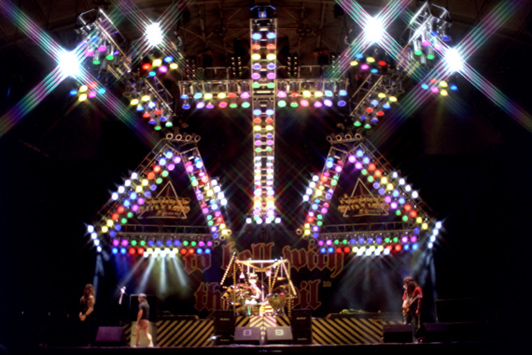
Glad to be here among such fine folk, and so on.
As I have stated in the comments of a few posts, I did not initially join this collaborative project because I lacked (and lack) any certainty about the relationships among and between Christendom, the kingdom of heaven, "the secular world," politics, nationalism, regionalism, religion, etc. Lacking that, I had (and probably have) no real assertions to offer. So I stuck with a few questions and dubious criticisms in the comments sections.
“I certainly agree that the two kingdoms are not nearly as disparate and divisible as most Protestants would like to believe.”
This was my latest vague throwaway. Trent suggested this was casuistry. If I knew what that meant, I imagine I'd agree. Wikipedia tells me casuistry has something to do with arguments made from case-studies. In any case (pun!), that sentence is certainly one of those things that sounds like a hefty statement until you realize it's actually a meaningless deflection. I drink better beer than most people. I am more fun than most Calvinists. I'm more intelligent, well-rounded, and modest than other grad students. All true statements, by the way.
Unfortunately for all of us,
I imagine we all agree that there's such a thing as the kingdom of heaven. Yes? Good.
We likely agree also that not everyone and everything is in it. Next we have to ask what constitutes part of the kingdom of heaven and what does not.
That question is too large for a comment, too large for a post, too large for a book, too large for our little minds. I'm not suggesting that God is uncertain about who–and what–is the kingdom of heaven, and who and what is not. I am suggesting that from our view–which happens to be the only one available to us–the lines are pretty fuzzy. Nevertheless I will venture a few undeveloped, and possibly incoherent, ideas.
In theory the "who" issue is quite simple. The body of Christ is the kingdom of heaven. And we can come up with some fairly reasonable ideas about who the body is–those who confess with their mouths that Jesus is Lord and believe in their hearts that God raised Him from the dead. Essentially, we who believe that Jesus is Lord, with all that that entails, are the body of Christ. Specificity on the issue ("he's in; he's out") is another thing entirely, and I will fight anyone who says otherwise.
I'm more interested in the possibly less pressing "what" question. I tend to think the kingdom of heaven includes creation beyond man. As creation fell with Adam, so it is being and eventually will be redeemed with Christ, and we believers are part of that redemption (indicated in Romans 8).
What is creation? Well, obviously, we're talking about the six days.
But does creation include what Dr. Birzer (among many others, no doubt) refers to as sub-creation? Are the things that we make with our minds and hands part of creation, since we fashion them out of God's creation? If they are part of creation, and if indeed God's creation will be redeemed with and in some way through the redemption of the sons of God, then the things that are made by us and perhaps even by those who are not in the kingdom will be redeemed too. I am less than certain about the nature of "subcreation," though I don't think it's an entirely unreasonable idea.
If that is the case, virtually every pursuit on this earth is connected to the kingdom of heaven. In this mundane world, we not only do all for the glory of God but also recognize that all that we do is somehow reflected in the kingdom of heaven. Our sub-creative work is not only intended to bring persons into the kingdom. In some sense it is the kingdom. This is, by the way, a foundation of the parish, in which one's life in this mundane world revolves around the church community.
I am not certain what this means for "Christendom," though it does imply that our political order has some connection with the hereafter on this earth. At the moment I find myself somewhat less interested in political orders, somewhat more interested in the cultural implications.
I may be venturing into casuistry again, but I suspect that "most evangelicals" do not believe in a kingdom of heaven that involves anything from this life except the souls (and also for some the bodies) of human beings, and I certainly don't believe the evangelical community imagines sub-creative work being present in the hereafter. Otherwise we wouldn't have the Religious Right trying to destroy the last puny barriers set up to prevent the total consumption by fire of the last blessings of the earth. Otherwise we wouldn't have Christian bookstores stocked with books and music that evangelize, yet without any subtlety or art. These products are good only as (a) tools for self-help/inspiration, (b) tools for evangelism, and (c) tools for making money off well-meaning schmucks.
Evangelism and inspiration–not bad things, these. What I mean, though, is that apart from such ends most of the latest products in any given Christian bookstore are not generally worthwhile.
---
John Jeremiah Sullivan writes about a Christian-rock festival:
These were not Christian bands, you see; these were Christian-rock bands. The key to digging this scene lies in that one-syllable distinction. Christian rock is a genre that exists to edify and make money off of evangelical Christians. It's message music for listeners who know the message cold, and, what's more, it operates under a perceived responsibility—one the artists embrace—to "reach people." As such, it rewards both obviousness and maximum palatability (the artists would say clarity), which in turn means parasitism. Remember those perfume dispensers they used to have in pharmacies—"If you like Drakkar Noir, you'll love Sexy Musk"? Well, Christian rock works like that. Every successful crappy secular group has its Christian off-brand, and that's proper, because culturally speaking, it's supposed to serve as a stand-in for, not an alternative to or an improvement on, those very groups. In this it succeeds wonderfully. If you think it profoundly sucks, that's because your priorities are not its priorities; you want to hear something cool and new, it needs to play something proven to please…while praising Jesus Christ. That's Christian rock. [. . .] And here, if I can drop the open-minded pretense real quick, is where the stickier problem of actually being any good comes in, because a question that must be asked is whether a hard-core Christian who turns 19 and finds he or she can write first-rate songs (someone like Damien Jurado) would ever have anything whatsoever to do with Christian rock. Talent tends to come hand in hand with a certain base level of subtlety. [. . .] So it's possible—and indeed seems likely—that Christian rock is a musical genre, the only one I can think of, that has excellence-proofed itself.
I love that last sentence: "So it's possible—and indeed seems likely—that Christian rock is a musical genre, the only one I can think of, that has excellence-proofed itself."

Matthew: (out of the corner of his mouth) So, Mr. Demarest, how'd you like to have a Conversation on Lemmings?
Trent: Uh...
Matthew: Pistachios?
Trent: Well, we...could...do that?
Matthew: How about a Conversation on Christendom?
Trent: OK, we could do that. What's the plan?
Matthew: Well, I was thinking of starting the conversation off and posting a few times, and then totally disappearing from the scene, never to post or be heard from again. How's that sound?
Trent: Uh...

Matthew: Do we have a deal?
Trent: (Thinking of how he could twist the circumstances for personal gain) Yes! Sure. We have a deal, my good sir...
Matthew: (To himself) I am very, very suave. And evil. Look at my vest.

Trent: Aha! A small Cuban! I will make him converse with us on Christendom!
Small, anonymous Cuban: Ayuda me! No señor! Necessito pan para mi familia!! No quiero tener Conversemos en Christendoma!

Trent: Look! A fair maiden! Perhaps she will converse with us! Word on the street is that she has a very high GPA!
Fair maiden: (to herself) Wha? Crap. Don't have my pepper spray.

Fair maiden: Go away. I don't want to converse with you and the strange English man. Besides, I have to do all these dishes before I go to the ball. Look at all of them...
...go away.
Trent: Wow! I am experiencing significant rejection here. Whatever am I to do?
...to be continued. Or not.
Sunday, July 11, 2010
Charity, Altruism and the Siren-Song of False Ecumenism
How It Was
Czeslaw Milosz
Stalking a deer I wandered deep into the mountains and from there
I saw.
Or perhaps it was for some other reason that I rose above the setting
sun.
Above the hills of blackwood and a slab of ocean and the steps of a
glacier, carmine-colored in the dusk.
I saw absence; the mighty power of counter-fulfillment; the penalty of a
promise lost for ever.
If, in tepees of plywood, tire shreds and grimy sheet iron, ancient inhabit-
ants of this land shook their rattles, it was all in vain.
No eagle-creator circled in the air from which the thunderbolt of its
glory had been cast out.
Protective spirits hid themselves in subterranean beds of bubbling ore,
jolting the surface from time to time so that the fabric of freeways was
bursting asunder.
God the Father didn't walk about any longer tending the new shoots of
a cedar, no longer did man hear his rushing spirit.
His son did not know his sonship and turned his eyes away when passing
by a neon cross flat as a movie screen showing a striptease.
This time it was really the end of the Old and New Testament.
No one implored, everyone picked up a nodule of agate or diorite to
whisper in loneliness: I cannot live any longer.
Bearded messengers in bead necklaces founded clandestine communes
in imperial cities and in ports overseas.
But none of them announced the birth of a child-savior.
Soldiers from expeditions sent to punish nations would go disguised
and masked to take part in forbidden rites, not looking for any hope.
They inhaled smoke soothing all memory and, rocking from side to side,
shared with each other a word of nameless union.
Carved in black wood the Wheel of Eternal Return stood before the
tents of wandering monastic orders.
And those who longed for the Kingdom took refuge like me in the
mountains to become the last heirs of a dishonored myth.
* * *
Milosz’s last stanza is haunting to me, yet I think it aptly captures what the fate of the Church in the world must be: we are the heirs of a dishonored myth. And this is not merely a historical statement, as in “we have become the last heirs of a dishonored myth.” The truth is that we have always been the heirs of a dishonored myth. For broad is the path that leads to destruction, and many take it, but narrow is the path that leads to life, and few find it. On earth we have no abiding city, for we are looking forward to the city which is to come.
I suppose this post falls in the category of “talking ‘til I’m blue in the face” about a minor doctrinal issue, while the real, important issue -- namely, good works -- falls by the wayside. If only Athanasius would have realized that the Deity of Christ was a minor doctrinal issue and encouraged the Christians to join hands with the Arians at a local soup kitchen. Who cares if the Arians were heretics? They were sincere in what they believed -- “people of good will,” if I may be so bold as to say. What prevents Muslims, Hindus and Buddhists of good will from joining the party? Apparently the Church’s original confession of Christ as Lord is negligible compared to one’s works. In fact, a charitable Muslim is probably more of a disciple of Christ than a crabby Christian. The Buddhists are an irenic sort; they might even chant “Christ is Lord” right along with us. As long as this is left sufficiently vague, adequately devoid of confessional content, it shouldn’t be a problem. Just rally round a diluted confession that everyone can agree on, and then pat yourself on the back for expressing the visible unity of the “Church.” Don’t pay attention to the minor doctrinal disputes such as the nature of the Holy Eucharist -- you know, the Medicine of Immortality? Don’t concern yourself with such piddling details as whether or not it really is the flesh and blood of the Second Person of the Trinity. As long as we agree that “it’s important,” we can move on. And synergism! A mere trifle, really.
While the above is obviously a satire of the position put forth by Byrthnoth in “Genotype and Phenotype,” it is intended to make a serious point. For those of you offended by satire, sarcasm, et alia, my apologies. It’s a legitimate polemical technique.
I don’t know what the “charitable scene is,” but I am pretty sure that whatever goes on there (and, to quote Gertrude Stein, I’m not sure that there is a “there” there on this one) is not going to make a hill of beans worth of difference in the imaginary Index of Christian Unity. The first, most obvious problem with speaking of a “charitable scene” is the partitioning off of good works from the ordinary world of men’s vocations. Are you a dentist? Do your job well, and gladly serve your neighbor through your vocation. Your work is a divine ministry. You need not put down your fluoride trays and tools and go to South America. You may. But it doesn’t matter if you choose to serve your neighbor in your dental office, cleaning his children’s teeth and advising him and his family on oral hygiene. In fact, it may be better if you don’t go on a missionary trip. There is a strong likelihood that that is the case, in fact. But this is all hypothetical. For a far better treatment of this issue than I am giving, or ever could give, see Lewis’s essay “Good Work and Good Works,” in The World’s Last Night.
“Oddly, churches that have disagreed on whether or not to condone abortion or even the uniqueness of Christ have been able to agree that ‘all people of good will’ ought join hands in acts of Charity.”
Is this sarcasm? I don’t find this odd at all. I’ll go ahead and say it -- if you condone abortion or believe that Christ is not true God and true Man, you’re not a Christian. The Christian is not free to call God a liar, and to do either of those things is to do precisely that. It is no surprise that all people of good will” join hands in acts of “charity.” However, they aren’t acts of charity if it’s just “all people of good will” doing them. The supposedly good works of the “pagan of good will” are damnable, execrable sins -- “filthy rags,” St. Paul calls them in his Epistle to the Romans. Yes, good may come of them -- God uses all things and works them all together for good -- but the works themselves are the opposite of virtuous. Do not call it charity; call it altruism -- which the nineteenth century positivist philosopher Auguste Comte defined as “brotherhood without a father.” This was not an epithet; Comte thought this a good thing. In any case, it couldn’t be farther away from “Christendom.”
“We’re more popular than Jesus,” John Lennon famously said in 1966. He was, of course, entirely correct. Yes, the man who wrote “Come Together” smugly acknowledged that he and his fellows were the purveyors of a new, wildly popular social gospel. Come together, right now, over me. Look at me. Rally around me. Humanity. The People. Shiny happy people holding hands. Come together: it’s an altruistic mantra.
Really? Is this what we’re called to?
“[W]e should take note that the only time denominations come together in one place and join together to act like one church may currently be the charitable scene, and this, perhaps, may be a better starting place for a visibly united Christendom than political states forming war and peace agreements.”
I would submit that the opposite is true: when “denominations come together in one place and join together to act like one church,” there is no other time when they are less the Church. Such falsely ecumenical posturing is not only vain, it is dangerous. It enlists the faithful in the construction of more and more Towers of Babel. More shameless question-begging follows with the assumption that anyone is seeking a “better starting place” for bringing about a “visibly united Christendom.” This is an incredibly vain proposition.
You want a visibly united Christendom? Go to Church and take the Eucharist. In the same way that each communicant receives the whole Body of Christ in the host, so also the whole Body of Christ gathers to partake of the Sacrament. The whole Church is mysteriously present wherever and whenever the Word is truly preached and the Sacraments are rightly administered. It is indeed truly ironic that Byrthnoth mentioned the Eucharist as something which amounts to an impediment to “a visibly united Christendom” -- it is actually the beating heart of anything even approximating “a visibly united Christendom.”
Now, I can imagine that a Pentecostal, a Methodist or any other Protestant who does not confess the apostolic doctrine concerning the Eucharist would resonate with Byrthnoth’s position, as it basically assumes that “what happens...concerning both the elements and the recipient” is really not of paramount importance (if my position has not been evident thus far, it is that “what happens...concerning both the elements and the recipient” is of paramount importance). I don’t think it would resonate with many Lutherans, Roman Catholics, or Eastern Orthodox.
I mainly just wanted to share the Milosz poem. I’d welcome any thoughts in response to what I’ve said.
Friday, July 9, 2010
Happy Birthday, Matthew...
...and many happy returns from all of us on the blog (go with it, guys; bathe in the togetherness of it all). Thanks for initiating A Conversation on Christendom.
For he's a jolly good fellow! For he's a jolly good fellow! For he's a jolly good FEL-LOW! And so say all of us...
So, do you want to post something?
For he's a jolly good fellow! For he's a jolly good fellow! For he's a jolly good FEL-LOW! And so say all of us...
So, do you want to post something?
Thursday, July 8, 2010
Genotype and Phenotype
So, I like biology, and sometimes science gives us better terms than the humanities (for those who disagree, please see www.xkcd.com to observe the numerous instances in which this are true). Several different genetic permutations, genotypes, result in the same end-product, or phenotype. For instance, two different sets of code could produce the same eye color, the same height, or the same disease. Similarly, two different diseases could produce the same symptoms and the same adverse affects. In political terms, the neo-con and the paleo-con fight like hell cats with one another, but they both voted for McCain rather than Obama in November. Different genotypes can and often do produce the same phenotype in the real world (outside of biology), especially when prudence is taken into account.
Earlier we had a question that asked if 300 different Christian denominations could agree on social or political causes in the same way if they disagreed on core doctrinal issues. The answer, I think, is a cautious "yes."
A strictly social gospel is a problem, but it doesn't surprise me that the social aspect of the gospel, loving one's neighbor, has been the only thing that many churches have been able to rally together around. Similarly, the Pope's bulls (ha!) have always been addressed to "all people of good will" (making it the longest running blog in history). Not specifically to Christians, but to all people of good will. hmm.
There is some validity in this, and I'm not saying that because I think he speaks with the voice of God. A methodist, a Lutheran, a Catholic, and a Pentecostal will all disagree on what happens during the Lord's Supper concerning both the elements and the recipient, but all will generally agree that one ought treat others with Christian Charity. I'm sure we've all seen the publicized efforts of "Christians joining hands in Haiti" or in several different inner city churches sponsoring joint work-days or soup kitchens. Many protestant missionaries are unaffiliated with a particular denomination, though they themselves, of course, align personally with a one.
We see in the Act and in the Pauline Epistles that this social (sorry, the word fits here) dimension of Christianity is important. Important enough, in fact, that the caveat to "only remember the poor" occurs often when instructions are sent, and the direction for the transportation of alms internationally takes up lines in the new testament as well. These charitable practices were seen as necessary, such that circumcision could be done away with, but not these. My church teaches that they are not necessary for salvation, but that does not make them any less necessary for the christian to do.
Oddly, churches that have disagreed on whether or not to condone abortion or even the uniqueness of Christ have been able to agree that "all people of good will" ought join hands in acts of Charity.
A unified visible Christian church is not an impossible thing. It existed once. I am not saying that we will ever be able to see the heart the way God does, or that we will ever create a heaven on earth before the Last Day when God creates a new heaven and a new earth, but I am saying that we should take note that the only time denominations come together in one place and join together to act like one church may currently be the charitable scene, and this, perhaps, may be a better starting place for a visibly united Christendom than political states forming war and peace agreements.
Sometimes, many genotypes make one phenotype. I can talk until I'm blue in the face about another Christian, disagreeing about synergism or the Lord's Supper, but we can somehow both generally agree that we have a duty to love our neighbor. Sometimes this general agreement can even turn into a particular agreement, such as two churches jointly funding an inner-city day camp as a mission for children.
Thursday, July 1, 2010
Leagues of State: of Turks, Greeks, and Israelis
The idea of a league of Christian states, or even of a League of states peopled by Christians (there is a difference between the two) may be a historical reality, but that does not necessarily mean that it is possible or prudent. Alliances between states are seldom made simply because states share some common religious or cultural tie. We have, historically, strong alliances between states sharing very little in the way of culture. Athens and Sparta, I think, would fit into this camp. We also have the example of the thirteen American colonies which, I hope we all know after the heritage sequence, might have prayed to the same God but were filled with peoples who had been blood enemies in the not very distant past (and would be again).
I suppose both of these instances provide us with an example of some degree of religious unity with very little cultural unity to buffer it being enough (with the added impetus of a common external enemy) to bring about a league of states for a sustained period of time, sustained meaning longer than it takes to fight a single war or battle, longer than it takes to fight off the common enemy which temporarily brought the allied states together. BUT, It should also be noted that in both cases, the lack of the external enemy saw the eventual need for force by one portion of the alliance to hold the body together or bring it together more completely.
Not to be a positivist or materialist, but the religious and cultural dimensions don't seem to be enough to hold groups of states together. They can hold together other systems of community, other rings of citizenship, such as the European intellectual and artistic culture which, to some degree, did survive reformations, schisms, and wars -no unscathed or unaltered, but the dialogue that Strauss referred to as the Great Tradition did continue. And before those reformations, schisms, and revolutions, European monarchs paying, in some way, homage to the same pope, whose people were all of the same faith and shared something of a common intellectual culture, often warred and fought one another. It would seem that the state, as a political body, must be held together by certain factors relating to politics. {I'm not an Aristotelian, politics is not an architectonic science, and classifying everything under God's golden sun as politics is as liken to an economist saying that everything is economics.} In he Christian tradition, we could look, perhaps, to the things St Paul mentions in Romans as an example of those areas of life which we could call political, or, shock, look at the modern consensus on what the term deals with: keeping the peace, economics, laws, etc.
As Americans, we have federal and state constitutions which outline, or at least were meant to outline for our country or state, those aspects of life falling under the term "politics." Calvin disagrees in his Institutes (Book 4, Chapter 20), and says that the duty of magistrates "extends to both tables of the law," but, whatever any of us may think of this (read the diatribe against Geneva found below), its impossible in a diverse society and illegal in ours.
States have a specific function, at least in our day, which does differ from the Greek polis. The local town, perhaps, may be different, but we live in the day of the Nation State and Multinational State.
Our closest allies (strategically/militarily/economically): UK (Christian Multinational State), Turkey (Secularist multi-ethnic state), Israel (Secularist ethnic state). By the way, secularist means just that: they don't like religion that much. Turkey and Israel, at least until last month's incident in the old Roman pond, have historically been great allies BECAUSE of their secularism, Turkey recognizing Israel and serving as an arms and military ally since 1947; they only stopped training in joint operations together last month, in fact.
Now the US has almost nothing in common with Turkey. It was founded in the heat of the Nationalism wave that crested after WWI, Ataturk consciously replacing Islam with Turkish Nationalism and his own hero cult (Khemalism). The people are nominally Muslim (20% is the published figure on active muslims), and their culture is not Western. Israel may have some common cultural ground...they like free markets and they fly cool new fighter jets, but its an ethnic state with an ethnic identity not informed in the same way by Western culture as the US.
England being, maybe, the exclusion, our closest military allies have almost nothing in common with us. One half of all of our foreign aid goes to Israel, Egypt, and Jordan. These countries share with us one thing: fear of losing control of their region to radical Islammic groups which would destabilize the middle east. This is a goal that very few European nations seem very vested in, despite common culture and traditions. I'm not even advocating that the reasons behind are closest alliances are true, good, or prudent, only that our closest alliances are based around concerns of state, such as defense, rather than our common culture, ethnicity, or religion. Historically, Ethnicity was never a rallying point (take that Wilson), and, in terms of the affairs of states, religion and culture don't seemed to have faired to well either.
Wednesday, June 30, 2010
Comment on 'Vocation', previous post...
The comment-feed gremlins said that my comment on Byrthnoth's post was too long. I've never had that happen before. Huh.
In any case, I don't really feel like being any more concise, so I'm pasting it here:
***************************************
I guess the answers to your questions would largely hinge on whether it is the vocation of any Christian--regardless of his station, be it teacher, politician, or garbageman--to "build Christendom." And that is why I can't get off this sticky widget: what Dickens is Christendom?!?!
Perhaps that whole debacle calls for its own post; I have a feeling it does and will be generating one once I collect my thoughts. For now, though, I'll give my quick takes, which I will try to keep relevant to Byrthnoth's post as well.
I agree with Byrthnoth: there is no purely civil libertarian argument against gay "marriage." For perhaps the best treatment of this issue, and one which examines it in the context of a much more widespread collapse of Western sexual ethics, read Christopher Oleson's piece "Phony Matrimony" in Touchstone magazine
I suppose the simplest argument against gay marriage when you're talking about building Christendom, regardless of how you define it, is that Christendom must be peopled! And, well...that demographic just ain't puttin' out. In all seriousness, though, I don't know if there's an argument to be made against civil unions for gays in our contemporary legal context. Natural law theory is dead. I mean, it shouldn't be. I'm sad that it is. But unless its corpus gets reanimated somehow, it's not much of a peg to hang anything on in the federal courts. Whether we (Christians) ought to try to find ways to "make them stop, Mommy!" is another question, the answer to which, I think must be "only through legal means." And if that can't be done, we accept what the magistrates say...unless they start telling us to engage in homosexual acts. See, that's a positive injunction to sin which we are bound to disobey.
I'm being cheeky and hyperbolic, but I'm also trying to illustrate a completely serious point. I mentioned this earlier in my comment on Brian's post on the Belgic Confession. Maybe we'd like to have more prohibitions in place, more specific curbs on man's sinfulness, in the civil government. There are means of bringing that about. James seems to think that the ballot measure isn't one of them. Maybe he's right. I haven't given it much thought. Regardless, absent a dramatic sea-change in government, however (like the US becoming a benevolent dictatorship overnight), we are bound to follow the laws. Likewise we are prohibited by God from engaging in vigilantism. It is not sinful to suffer the sinfulness of others (e.g., "Turn the other cheek"), unless it is your office, your vocation, to bind and to loose, to wield the keys whereby forgiveness is proclaimed or withheld. Unless you're a pastor of the Church, this isn't you. As Christian laymen we are constrained on a daily basis to tolerate the wickedness of the world and its denizens. Yes, tolerate them. Put up with them. Otherwise you're in an uncomfortable position of being compelled by conscience to disobey any government which is not completely legitimate, whose laws do not mandate perfect holiness. The problem is that no such government exists or can exist. You'd be honor bound to live as a rebel all your life. But you would be, sadly, "a rebel without a clue," in the immortal words of the philosopher Petty. Governments are flawed institutions administered by human beings; there is not a one of them whose founding is not steeped in blood. They're all illegitimate in one way or another. But they're still authoritative. The fact remains, though, that we would not need them were we not fallen. We would not need the negative which they have been given to wield--the administration of violence, the sword. It's been said that we'd still need traffic lights, stop signs and the like, but I don't think there would be cars in an unfallen world. Well, maybe there'd still be BMWs.
...but I digress.
I'm not sure what annoys me more: the fact that homosexuals are allowed to "marry," or that all the rubes from the Christian Coalition et al are out there on the steps of the nation's courthouses protesting in a high dudgeon like they own the place, incredulous that this could have happened in God's Country!
Why are they/we so surprised? Why are they protesting at a courthouse? This is a human problem at base, not a political one. I'm not saying that there are no political steps which must be taken as well, but they're already being taken -- at the ballot box. And for now, marriage amendments (which I am uneasy about to say the least) are passing by the slimmest of margins, and gay "marriage" is still illegal in most states. But that's not making anyone less gay, remember? So vote against them if they come up in your state. But if and when they pass, you are duty-bound to obey the law, and tolerate civil marriages between gays. You can move to a different state, or retreat to the country. But you have to honor the law--again, unless the terms of a particular law are telling you that YOU, sir, must marry a man, in which case, sure, protest. Disobey.
Not only is it a bad idea to build Christendom, I'm not sure we have the right to build it. But then there's that bugaboo again: WHAT IS THIS CHRISTENDOM THAT WE SHOULD/SHOULD NOT BUILD?? Suffice it to say that I remain dubious about the possibility of a political alliance of Christian states, dubious, even, of the notion of a "Christian state," as I've said before.
Thoughts? Byrthnoth, yours especially...
Vocation
Avoiding Huffiness, as per Mark's sage advice, and as we've already discussed the (not quite ivory tower) "you can't change the world, brighten the corner you're in" thesis, perhaps we could talk about what it means to be a teacher at a Christian School rather than a School, and, at the other end of the spectrum, what it means t be a Christian politician rather than a non-christian (atheist or pagan or whatever) politician. Its been said on this message board that there is nothing decidedly Christian about morality, something which maybe this will bleed into.
In some important ways, it does matter whether or not one's elected officials are Christians or atheists, and in some ways it matter if they are Christian or Muslim, for example. Not always, but sometimes.
An example: it makes no political sense that gay marriage should be an issue. From a civil rights stand point, there really is no reason to disallow two fellows to shack up with the same benefits as a guy and a gal; however, Christianity has a distinctive teaching on homosexuality (shared, as far as I know, by Islam and possibly borrowed from Christianity) which prohibits it. Now, from a civil standpoint, as a man operating and voting according to the constitution and legal traditions of our country, there's no reason for me to vote against gay marriage on a state constitutional ballot proposal. In fact, I might vote against it, say, because I disagree with ballot proposals as a means by which to change state constitutions.
However (yes, starting with a post-positive!), as a Christian, this should bother me. Not so much because I think anyone will become "less gay" or "more gay" by my vote, or even because I think the Bible has outlines on the civil laws of the country in that regard (we must be prudent in governing I suppose). Married couples are more eligible to adopt children from adoption agencies and to receive government adoption assistance, and adopting a chid means raising a child and instilling that child with values and morals. "Raise up a child in a certain way and he will not depart from it." From the standpoint of human rights, it makes sense to allow to men to marry. When looking at it from the tradition of Judeo-Christian morality, (without claiming to be any holier than those two fellows mind you), one has the imperative to take legal steps, like voting for that proposal perhaps, against handing children over to them when such steps are within one's vocation to do so.
Refute? Support? Buy me lunch?
Saturday, June 26, 2010
James Davison Hunter in Christianity Today
Thank you, Joy, for posting snippets of that excellent feature piece in Christianity Today. The interview with James Davison Hunter is indeed excellent, and quite germane to our discussion. I would highly recommend it to all who are participating in this forum, or merely following it.
Here are some choice tidbits from the interview:
"Culture is far more profound at the level of imagination than at the level of argument. Deep structures of culture are found in the frameworks of our imagination, frameworks of meaning and moral order that are embedded in the very words we use. There's a difference between the weather and the climate. Contemporary politics is like the weather, changing day to day or week to week. But culture, in its most enduring qualities, isn't about the weather at all. It's about the climate. Changes in the climate of culture involve convoluted, contested, and contingent dynamics."
"[T]he title of my book [To Change the World] is ironic, because I'm trying to disabuse people of changing the world. We cannot control history—God alone is its author. We're accountable for our actions as individual believers and as a body of believers. The nature of that accountability is clear from Scripture, theology, and history. The point is not to change the world but to serve faithfully in our relationships, tasks, and spheres of social influence."
"The rhetoric of world changing originates from a profound angst that the world is changing for the worse, and that we must act urgently. There's a sense of panic that things are falling apart. If we don't respond now, we'll lose the things we cherish the most. What animates this talk is a desperation to hold on to something when the world no longer makes sense....It may be that the amount of rhetoric is inversely related to our actual ability or capacity to change the world. Most American Christians believe America owes its greatness to Christianity, which is now being uprooted. Uprootedness brings sadness and nostalgia. The problem here is not just the historical question—was America ever a Christian nation?—but the theological question, should America be a Christian nation? If you don't believe that America was ever or should ever be a Christian nation, you will evaluate cultural changes from a different vantage point. Some changes might be destructive, but you will not feel obliged to save America or to save the West. That's not the burden of faithful presence in the world."
"The state is the sole legitimate source of coercion and violence. When Christians turn to law, public policy, and politics as the last resort, they have essentially given up on a desire to persuade their opponents. They want the patronage of the state and its coercive power to rule the day. What makes this problematic, in my view, is that the dominant public witness of the church is political, rooted in narratives of injury and discourses of negation. The sense of deprivation among Christians leads to an ethic of revenge, or what Nietzsche called ressentiment. In different ways and to different degrees, the prevailing political theologies in American society today—the Christian Right, the Christian Left, and even the neo-Anabaptists—partake in that ressentiment and consequent will to power. And here's the tragic irony: Whenever Christian churches and organizations partake in the will to power, they partake in the very thing they decry in society."
"Christians need to abandon talk about 'redeeming the culture,' 'advancing the kingdom,' and 'changing the world.' Such talk carries too much weight, implying conquest and domination. If there is a possibility for human flourishing in our world, it does not begin when we win the culture wars but when God's word of love becomes flesh in us, reaching every sphere of social life. When faithful presence existed in church history, it manifested itself in the creation of hospitals and the flourishing of art, the best scholarship, the most profound and world-changing kind of service and care—again, not only for the household of faith but for everyone. Faithful presence isn't new; it's just something we need to recover."
From the Belgic Confession, article 36, still in use in the Reformed Church in America:
"And the government's task is not limited to caring for and watching over the public domain
but extends also to upholding the sacred ministry, with a view to removing and destroying
all idolatry and false worship of the Antichrist; to promoting the kingdom of Jesus Christ; and
to furthering the preaching of the gospel everywhere; to the end that God may be honored
and served by everyone, as required in God's Word."
Proposition: this assignment of tasks is appropriate to the biblical nature of government.
Thoughts?
Near the start of the 20th century, an official meeting of the Christian Reformed Church claimed grounds from Scripture and revised this paragraph to a footnote. However, I haven't researched enough to find what actual Scripture they cited.
"And the government's task is not limited to caring for and watching over the public domain
but extends also to upholding the sacred ministry, with a view to removing and destroying
all idolatry and false worship of the Antichrist; to promoting the kingdom of Jesus Christ; and
to furthering the preaching of the gospel everywhere; to the end that God may be honored
and served by everyone, as required in God's Word."
Proposition: this assignment of tasks is appropriate to the biblical nature of government.
Thoughts?
Near the start of the 20th century, an official meeting of the Christian Reformed Church claimed grounds from Scripture and revised this paragraph to a footnote. However, I haven't researched enough to find what actual Scripture they cited.
Friday, June 25, 2010
The Church and Culture
Thesis: We cannot separate cult (the Church) from culture; obversely, neither can we conflate the Church and the State.
Byrthnoth, I see where you're going with this. I'm not sure I agree, and not sure if I disagree, but I think I know where you're going.
You're talking about that "Republic of Letters" that we talked about in IDS 300 with Dr. Birzer. You're describing a culture which understands and appreciates the Christian influence in Western Culture, whether or not it confesses Christ as Lord. That way Matthew Arnold, Joseph Wood Krutch, Jakob Burkhardt and other modern noble pagans could come play in our sandbox.
I agree with you when you say that this a good thing. A lesser good, obviously, than that which the Church administers. It is, in fact, the good which we all hope to attain in some part through studying the liberal arts -- the good of Christian culture, whose watering streams are knowledge and virtue. Yup, I'm going to call out Aristotle on this one and say that the servile is higher than the liberal. Jesus Christ, the foot-washing King, beats the Magnanimous Man six ways before Sunday, and on Sunday...man he REALLY beats him on Sunday...but I digress.
It seems to me that Christian culture, churchly culture, is an epiphenomena of the Church. A vigorous, thriving Church which confesses Christ and defends pure doctrine produces in and through its members the artifacts of culture that we know and love so well, that we pine for: beautiful architecture, stirring literature, honest politics, humane commerce. Who does not desire to live in a place where these things exist in abundance?
As much as this is true, mark well a truth of the human condition (I said it) that makes these cultural goods nothing more than withering grass and fading flowers. And I say this as one who likes flowers and grass just as much as the next guy. But, people...original sin. Byrthnoth, there's a section in the Apology you might want to review. The Church of Christ is comprised of men who are at once saints and sinners, and Her works are not always those befitting the bride of a righteous King. In the Old Testament, God tells Hosea to marry a prostitute in order to say, in effect, "see how YOU like it!" Because that's what He did. Christ wed himself to prostitute, forgiving her sins, which were as scarlet, making them white as snow. Yet like the woman whom He tells "go and sin no more," we, the Church, go, and sin more. As I have said before, the Church is an unfaithful bride. Yet Christ's love abounds, and His forgiveness abounds all the more. This is mystery which no philosophy can penetrate.
How important, then, is it that we have a nice monolithic Christian culture in which to dabble? Not as important as it is to take every thought captive to Christ, that in all things He might have the supremacy; to consider all things loss for His sake. The world is fallen, and the line through good and evil runs through every human heart. You want culture? Again, you will never find it separate from the Church. The Church is culture. The family is culture. These are the seats of religious life -- not the state; not the market. The latter are the seats of secular life. Never expect them to exhibit the consistency of character which even the Bride of Christ cannot attain to by her own merits.
The problem here is not that we don't have Christian culture. The problem is that we -- the participants of this conversation included -- seem to be begging the question of "How should we change the world?" and then having a discussion over ways and means, with the general assumption in place that of course we can and should. As if that's what our good works are supposed to do. No, your good works will probably not change the world. But they may serve your neighbor.
Byrthnoth, I see where you're going with this. I'm not sure I agree, and not sure if I disagree, but I think I know where you're going.
You're talking about that "Republic of Letters" that we talked about in IDS 300 with Dr. Birzer. You're describing a culture which understands and appreciates the Christian influence in Western Culture, whether or not it confesses Christ as Lord. That way Matthew Arnold, Joseph Wood Krutch, Jakob Burkhardt and other modern noble pagans could come play in our sandbox.
I agree with you when you say that this a good thing. A lesser good, obviously, than that which the Church administers. It is, in fact, the good which we all hope to attain in some part through studying the liberal arts -- the good of Christian culture, whose watering streams are knowledge and virtue. Yup, I'm going to call out Aristotle on this one and say that the servile is higher than the liberal. Jesus Christ, the foot-washing King, beats the Magnanimous Man six ways before Sunday, and on Sunday...man he REALLY beats him on Sunday...but I digress.
It seems to me that Christian culture, churchly culture, is an epiphenomena of the Church. A vigorous, thriving Church which confesses Christ and defends pure doctrine produces in and through its members the artifacts of culture that we know and love so well, that we pine for: beautiful architecture, stirring literature, honest politics, humane commerce. Who does not desire to live in a place where these things exist in abundance?
As much as this is true, mark well a truth of the human condition (I said it) that makes these cultural goods nothing more than withering grass and fading flowers. And I say this as one who likes flowers and grass just as much as the next guy. But, people...original sin. Byrthnoth, there's a section in the Apology you might want to review. The Church of Christ is comprised of men who are at once saints and sinners, and Her works are not always those befitting the bride of a righteous King. In the Old Testament, God tells Hosea to marry a prostitute in order to say, in effect, "see how YOU like it!" Because that's what He did. Christ wed himself to prostitute, forgiving her sins, which were as scarlet, making them white as snow. Yet like the woman whom He tells "go and sin no more," we, the Church, go, and sin more. As I have said before, the Church is an unfaithful bride. Yet Christ's love abounds, and His forgiveness abounds all the more. This is mystery which no philosophy can penetrate.
How important, then, is it that we have a nice monolithic Christian culture in which to dabble? Not as important as it is to take every thought captive to Christ, that in all things He might have the supremacy; to consider all things loss for His sake. The world is fallen, and the line through good and evil runs through every human heart. You want culture? Again, you will never find it separate from the Church. The Church is culture. The family is culture. These are the seats of religious life -- not the state; not the market. The latter are the seats of secular life. Never expect them to exhibit the consistency of character which even the Bride of Christ cannot attain to by her own merits.
The problem here is not that we don't have Christian culture. The problem is that we -- the participants of this conversation included -- seem to be begging the question of "How should we change the world?" and then having a discussion over ways and means, with the general assumption in place that of course we can and should. As if that's what our good works are supposed to do. No, your good works will probably not change the world. But they may serve your neighbor.
Christendome is and is not the Church catholic
The idea that Christendom is the universal church of Christ is a very good one, and I hope the one that we all first thought of as an appropriate definition. That the Church makes up the people of God is, I think, something we can all agree on.
There is that business of culture, though. I think that we use "the church" to mean Christ's bride, but that Christendom implies a (here's for you roomie) lower, less important, vastly important cultural order. When one looks at Oxford's dreamy spires, one looks at Christendom. When one looks at two or more people gathered together to pray in name of the Triune God, one sees the Church. One is cultural, the other something more.
I'm not trying to make anyone upset, so here's a better illustration, borrowed from Rowan Williams' introduction to a new book series put out by Baylor University Press entitled 'The Making of the Christian Imagination.' His book, the only to be published so far, is on Dostoevsky. Anyway, the Archbishop points out that there is a particular culture of Christianity which is somewhat opaque to outsiders. Here's his example:
We often say that Graham Green and Waugh are 'Catholic' or 'Christian' authors. What we mean, in regards to most of their books (The Power and the Glory is a good example) is that the themes being dealt with will seem particularly, well, non-existent to a non-christian audience, or at least to an audience which has no understanding of the way Catholic ordinations work. One need not be Christian to understand Graham Green's novel, but one must be well versed in Christianity to understand it, much less appreciate and by moved by it.
We also call Flannery O'Conner a "Christian" or "Catholic" author. What we mean here is different. Where one must be culturally sensitive to Christianity to appreciate Graham Green's "The Power and the Glory," one need not be Christian at all to like O'Conner's short stories. But, if one is a Christian, her novel appears to be about the absence of Grace, where it will appear to be about nihilism to an outsider (for an example, try reading "A Good Man is Hard to Find.").
So, we have this thing called "the Church" which we could very well and rightly call Christendom. But, for the sake of conversational shorthand, we could also call "Christendom" the cultural body that can properly read and appreciate O'Conner, Cather, Eliot, and (maybe) Dostoevsky. These two bodies are not necessary one and the same. Melville, for instance, could be considered part of the cultural body known as Christendom as he works within an anthropology that he most definitely inherited from his New England puritan ancestry (his novels being able to be read alongside, say, Hawthorne but NOT Emerson), whereas, as far as we know, he did not participate in the body known as Christ's Church, the primary definition of Christendom.
So, the first Christendom we mentioned and all (I hope) thought of, we could define as the Church catholic, the other we could define as a mental and epistemological framework that knows why there are pelicans all over that old building with the "t" on top but thinks its still kind've odd that you'd eat your god.
I'm not trying to make less of the Church by trying to say that there is a Christian Culture apart from it. Byron and Emerson both have poems that most certainly come out of a Christian mental and cultural framework (biblical narrative, eucharistic imagery, etc) which can only be understood if one has an understanding of Christianity, but they certainly do not represent the work of Christ's church.
Just looking for the proper shorthand I guess...
Subscribe to:
Posts (Atom)